
Nigeria holds a record that most countries will envy. We are the largest cassava producer on earth. To put this in numbers, 62.7 million tonnes annually, nearly 20% of everything the world grows (News.ng, Nigeria Leads in Cassava Production but Lags in Global Processing Market). Farmers here have been working this crop for generations.
And yet.
Nigeria captures just 2% of cassava’s $180 billion global processing market (Business Day, ng). Two percent. The distance between those two numbers is not a farming problem. It is a food security infrastructure problem, one that has quietly cost Nigeria decades of economic opportunity and rural prosperity.
And it is exactly the problem FMS Farms is engineering its way out of, 5,000 hectares at a time, in Ekiti State, Southwest Nigeria.
This piece breaks down what that infrastructure looks like in practice, and why it matters for the future of food security in Nigeria.
Why Nigeria’s Food Security Infrastructure Has a Critical Gap And What It’s Costing the Country
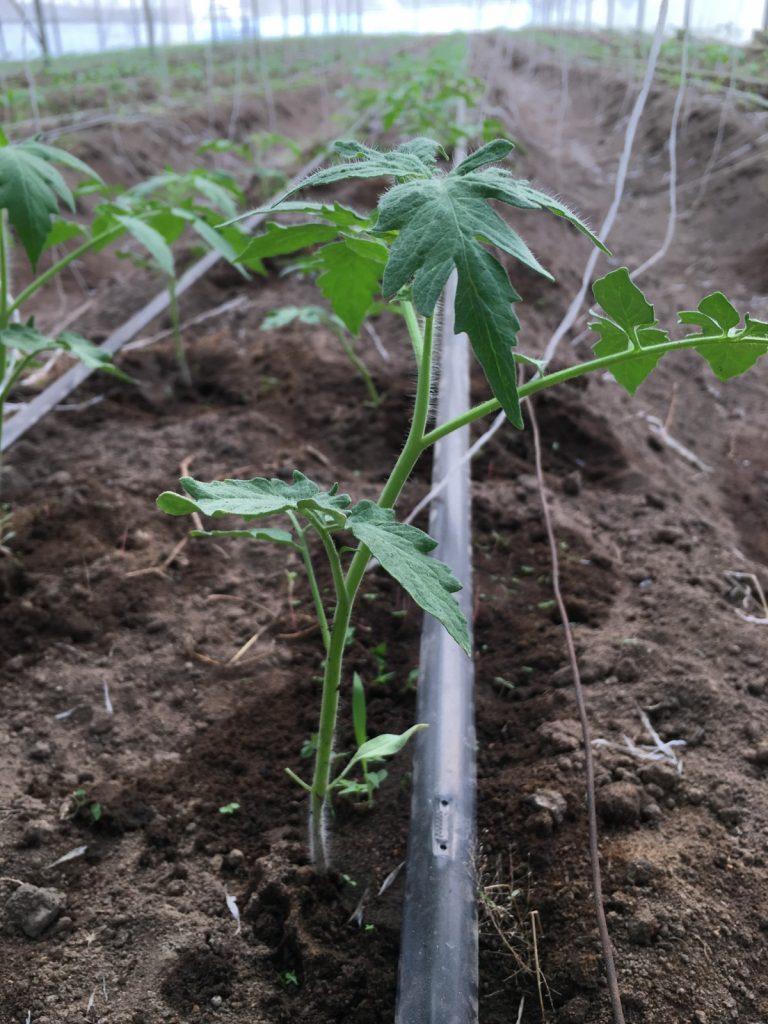
Nigeria already has volume. Land is not an issue either. Both are readily available. The gap exists elsewhere.
The demand for local use of cassava starch is increasing by 3.21% (Data Bridge Market Research, Nigeria Cassava Starch Market). The issue, however, is that local production capacity is not increasing at the same rate. The gap between what is produced and what is used in the industrial production of starch is still wide. And it increases with each passing season. Some of the factors are on the production side. Currently, the average yield per hectare is between 8 and 11 tonnes(Cara Development Foundation). But with better management, this can be increased to between 40 and 60 tonnes.
Rainfall is not an issue, nor is the quality of the soil. It is access to the right inputs, knowledge, and support that turns production into a supply chain.
Then there’s processing. Nigeria still doesn’t have the scale. Traceability across the value chain is limited. A good share of the value created from cassava leaves the country at this stage. It gets processed abroad and sold back in higher-value forms.
That’s the gap FMS Farms is trying to close.
What FMS Farms Is Actually Building: 5,000 Hectares of Integrated Agribusiness in Ekiti State
A trip to Ekiti State, Nigeria, in a small town, lies 5000 hectares of land where FMS Farms runs its primary operations.
This is not a single crop farm. Rather, FMS manages cassava farming, vegetable farming, and cashew plantation, the latter of which is included to offset carbon emissions and contribute to climate change mitigation.
This shows that apart from our contribution to food security infrastructures in Nigeria, we are intentional about impact, even if it means making the air around us a tad cleaner than we met it.
At the heart of our operations is the cassava project. FMS manages 3000 hectares of cassava cultivation, which requires 75,000 metric tons of fresh cassava roots to keep its processing at capacity..
Let’s not forget our partners who serve as checks and balances. The likes of The Sustainable Trade Initiative. The Benin Owena River Basin Development Authority. The Government of Ekiti State, just to mention a few. These organizations do not feature in the list of FMS partners as mere window dressing. Rather, they serve as governance checkpoints to validate whether FMS Farms’ operating standards conform to international best practices in the management of sustainable and traceable integrated agribusinesses in Nigeria.
All of which set us apart from other farms with similar ambition.
How FMS Farms’ Block Farming Model is Redefining Nigeria’s Food Security Infrastructure
Our block farming model has strengthened not just the surrounding communities but also created a ripple effect of socioeconomic impact in the country. Each block farmer receives farming inputs and Good Agricultural Practice (GAP) training. This structure has integrated smallholder farmers into a reliable, commercial food system.
Farmers themselves attest to the impact of this program, with most of them hinting at a significant increase in productivity and income. You can check the websites for a thorough view of the testimonials
Even as local demand for industry use of cassava continues to rise, FMS farms out grower scheme mitigates this issue as it connects smallholder farmers to commercial processing, thereby increasing scale.
The ₦3.5 Trillion Problem: How FMS Farms Is Tackling Nigeria’s Post‑Harvest Loss Crisis
Visit any small Nigerian farmer’s market today, and you’ll find at least one or two vendors complaining of losses suffered after harvesting. What is the main cause of these losses? Bad logistics.
It is no longer a secret that post-harvest losses are among the top challenges facing Nigeria’s agricultural sector.
Nigeria’s annual post-harvest losses run between ₦3.5 trillion and ₦5 trillion(Nairametrics), exceeding the entire 2025 agriculture budget allocation of ₦2.27 trillion. According to USAID approximately 50% of fresh agricultural produce in Nigeria never survives the journey from harvest to end use. This is due to spoilage during handling, transport, storage, and processing.
For example, in the case of cassava, losses are attributed to storage, transportation, and weak value chain linkages. At that scale, post-harvest loss becomes less of the farmer’s problem and more of a national food security infrastructure issue.
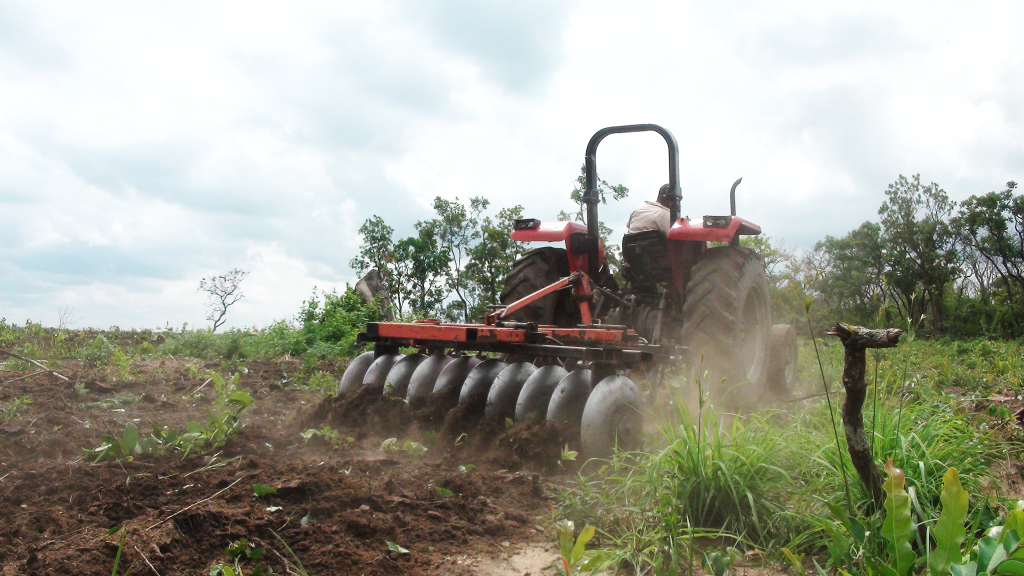
At FMS Farms, we respond through a dedicated in-house logistics and mechanisation division, one that sits at the centre of everything we do. Rather than outsourcing these services, we aim to provide more of these in‑house mechanisation and logistics support across our own farm and for the surrounding smallholder community farmers.
We believe that this division will handle everything from land preparation and harvesting to transportation, greenhouse infrastructure installation, machine servicing, and maintenance. This stays in line with our aim to reduce reliance on fragmented third-party providers whose inefficiencies contribute to spoilage.
Training, Gender Inclusion, and the Human Side of Building Sustainable Food Security Infrastructure in Nigeria
Scale and capacity are part of the equation for FMS Farms. However, the human factor presents another part of the equation, and it’s the most important one.
Small-scale farmers in Nigeria’s agricultural belt have for decades been working without adequate exposure to Good agricultural Practices and quality inputs.
This is where FMS Farms steps in. Every block farmer within our ecosystem receives hands-on training in Good Agricultural Practices as part of our standard operating practice.
But that’s still not all. We also offer quality drought-resistant cassava stems, which are carefully chosen to mitigate the effects of climate on our crops. And, of course, insurance for all our block farmers to cover them from floods and droughts. In a country where climate change is a serious threat to agricultural production, this is how we protect our supply chain.
Gender inclusion is not an afterthought. FMS Farms enables women to participate in the program as block farmers. This gives them access to land, resources, and markets. This is important in a system where women are disenfranchised because of their inability to own land.
FMS FARMS FYAES Program
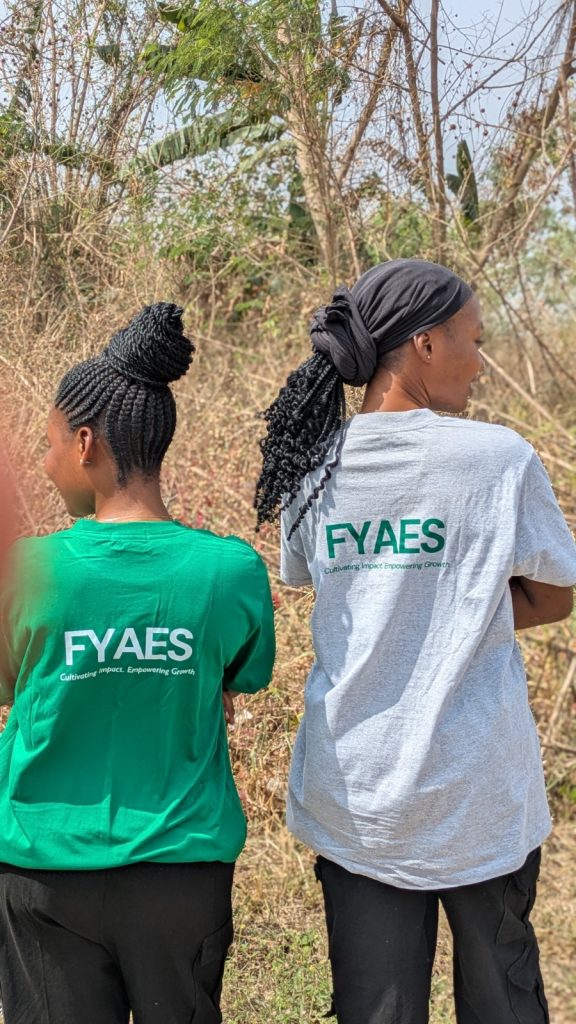
This is taken a step further by the FYAES Program. The FMS Youth Agribusiness Empowerment and Sustainability Program is a Learn-To-Earn program that targets young women in Ekiti State, Nigeria, with an age range of 18-33 years. This program also targets persons living with disabilities and internally displaced persons
After successful completion of the program, we allocate a piece of farmland of one acre, offer full mechanization support, access to cassava stems, fertilizers, as well as training in modern farming, and a guaranteed market for all she harvests.
Every FYAES Farmer that we bring into our ecosystem is not only helping us build our supply chain but also helping us build our supply of everything that we produce.
For policy stakeholders, this matters beyond the farm. SDG 2 — Zero Hunger. 5 — Gender Equality and SDG 13 — Climate Action. The training and inclusion system developed by FMS actually works towards achieving all three at once, not as separate programs, but as one system that is already in operation in Ekiti State.
FMS Farms is Building the Food Security Infrastructure of Our Dreams
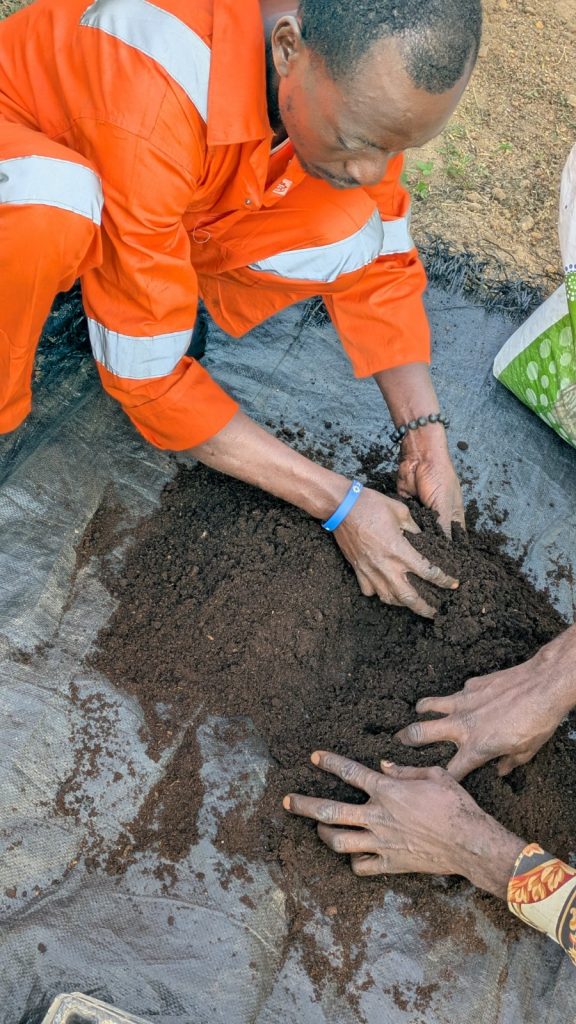
Nigeria has never been lacking in cassava; the problem has always been how to do something worthwhile with the crop.
But we at FMS Farms are doing just that with our 5,000 hectares of existing operations in Ekiti State. We’re training farmers and youths, and building the future of our dreams one crop at a time.
You should be a part of what we offer. Get in touch with us here.